Capabilities

Tell Us What the Part Must Withstand. We Define How to Make It.

Temperature, load, chemicals, wear, tolerance and quantity determine the material and process. If you already have a specification, we review it. If not, we can start from the part, a file, a drawing or photos.

  • Technical quote in one working day
  • Engineer-reviewed
  • Manufactured in Roatán
  • Regional shipping

Processes

Six Processes, One Engineering Review

ProcessMaterialsBest forTolerance
FDMPEEK, ULTEM (PEI), PPSU, PPS-CF, PPA-CF, PA12-CF, PET-CF, PP-GF, PC-FRSustained heat, solvents, wear, flame ratings±0.2 mm typical; post-machined faces to spec
SLAStandard, tough and high-temp resinsFit checks, fine detail, patterns±0.1 mm typical
SLSPA12, PA12-CFBatch parts, living hinges, complex internals±0.3 mm typical
CNCOn printed parts and stockBores, sealing faces, datum surfacesAs drawn
Laser Cutting & EngravingAcrylic, wood, leather, fabric, foam and laser-safe gasket sheet; marking on metals and anodised aluminiumFlat parts from sheet, guards, shims, labels, permanent part numbers, serials and logos±0.1–0.2 mm on cut profiles
Injection MoldShort runs from printed moulds50–500 pieces in commodity polymersMould-dependent

Selection guide

If the Part Has To…

RequirementStart hereIf that is not enough
Sit next to sustained heatPPA-CF → PPS-CFPEEK · ULTEM (PEI)
Take solvents, fuels or aggressive wash-downPP-GF → PPS-CFPPSU · PEEK
Hold a dimension across a shop-floor temperature swingPET-CF → PPA-CFCNC post-machined faces
Slide, wear or run against metalPA12-CF → PPS-CFPEEK
Insulate, or pass a flammability requirementPC-FRULTEM (PEI)
Be cut flat from sheet — guards, shims, gaskets, labelsLaser-cut acrylic or laser-safe sheetCNC-milled from plate
Carry a permanent part number, serial or logoLaser markingEngraved metal tag, riveted on
Carry pressure, combustion heat or a life-safety loadNot a printed partMachining or moulding — we will say so

Twenty grades on the floorevery grade dried before it runsdatasheets on request

Industries

Find Your Application

From discontinued replacements to wear parts, adapters and tooling, we manufacture around the equipment you already operate.

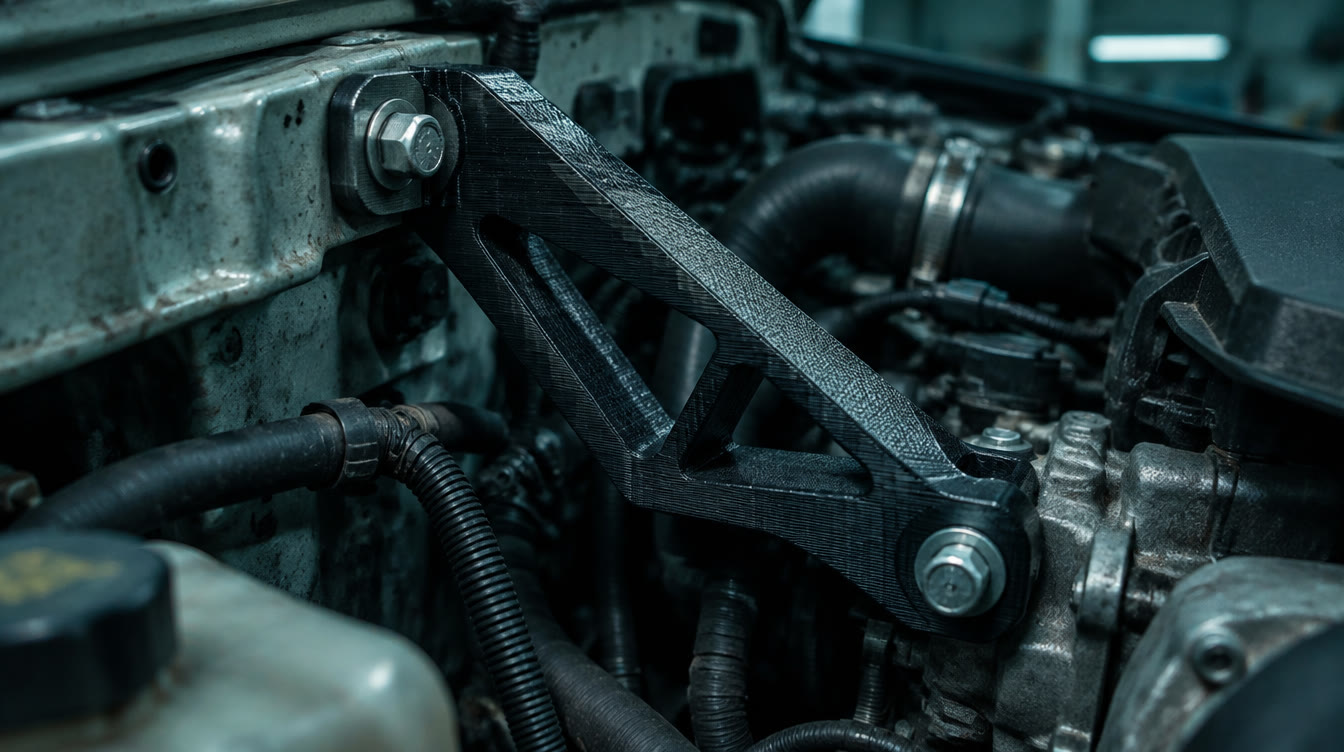
Vehicles: printed part in use

Vehicles

Cars and pickups, motorcycles, golf carts, utility vehicles, small boats and mixed fleets.

The trim part is discontinued, a clip snapped and the supplier wants you to buy the whole panel, a new instrument does not fit an older dashboard or helm, or sun and salt have taken the original.

Interior Trim and Panels

Radio and instrument bezels, blanking inserts, helm surrounds and end caps, knob bodies that keep the original metal insert, fastening inserts that repair a broken tab instead of replacing the panel.

Hinges, Slides and Small Mechanisms

Vent pivot inserts, console hinge inserts, guide blocks for compartment lids, cabin door sliders and track spacers.

Fitting New Equipment to Older Dashboards and Helms

Display-opening reducer plates, instrument adapter panels, telematics and auxiliary-display plates, adapters that mount a purchased accessory to the fastening already there.

Fleet Batches and Workshop Tooling

One finish across every unit of the same model, laser-marked fleet numbers and asset tags, plus connector trays, marking templates and seating checks that make a repetitive job repeatable before anyone cuts.

Material strategy

UV-stable ASA and marine-grade HDPE for anything the sun and salt reach, acetal for pivots and sliding fits, aluminium where an instrument bolts down and must not move.

Scope and validation

No brakes, steering, suspension, fuel-system parts, restraints, airbags or structural components. On boats, nothing that passes through the hull or keeps it watertight.


Machinery: printed part in use

Machinery

Production and packaging lines, textiles, agriculture and agro-processing, HVAC, refrigeration, pumps, cleaning and power equipment.

A wear part fails every few months and the import lead time is measured in quarters, or the machine is old enough that the OEM no longer answers.

Wear Parts on the Line

Conveyor guide blocks and sliding wear strips, short roller bodies for standard bearings, small spur and idler gears for low-energy feeders.

Sensor and Controller Mounting

Adjustable plates for photoelectric sensors, controller cutout reducers, laser-marked instrument faceplates and nameplates, meter adapter plates inside the original enclosure.

Changeover and Assembly Tooling

Part-positioning nests, component trays, inspection nests, laser-cut shims and marking templates that make a repetitive job repeatable.

Agriculture and Agro-processing

Metering discs developed on the bench, idler gears and spacers, irrigation controller mounts, external guides that never touch product.

Material strategy

Acetal for wear and sliding fits, aluminium for rigid mounting, high-temp composites where the part sits near heat or solvents, marine-grade HDPE where salt air is constant, PETG for bench tooling, and laser-cut sheet for shims and flat parts.

Scope and validation

We check that no standard part exists first. No pressure, lifting, high-energy, electrical-power, food or drinking-water contact, or safety-rated applications without specific qualification.

Robotics: printed part in use

Robotics

Robotic cells, end-of-arm tooling, machine vision, assembly stations and integration hardware.

The gripper fingers wear out faster than the OEM ships them, or a new workpiece needs a changeover set that does not exist yet.

End-of-arm Tooling

Replaceable gripper fingers that keep your purchased gripper, flexible jaw inserts with mechanical retention, soft jaws for non-marking workholding.

Vision and Sensor Integration

Camera adapter plates, sensor-position adapters, mounts for purchased lights and shading screens.

Changeover Sets and Fixtures

Nest inserts and positioning stops for each workpiece format, laser-cut locating plates, module-assembly nests, part-positioning trays.

Development Work

Fit models for actuator covers and fine geartrains, PCB mounting nests, simple adapter boards for low-voltage bench tests.

Material strategy

Acetal for sliding and wear, aluminium for anything that locates a camera or an actuator, TPU as separate retained pads, fine resin for fit models.

Scope and validation

We do not replace cell safety systems, brakes, high-load gearboxes or critical controls. A bench fixture is not approved for a cell just because it fits.

Drones: printed part in use

Drones

Unmanned systems for mapping, inspection and agriculture, including coastal and over-water work, plus payload integration and ground support.

A new sensor has no mount for your airframe, or the fleet keeps arriving damaged because nothing in the case is fitted to it.

Payload Mounting

Camera and sensor mounting plates, adapter models for inspection and mapping sensors, ground-station tablet-mount adapters.

Ground Support and Field Service

Bench fixtures for arm alignment, assembly supports, model-specific repair trays and small-parts organisers.

Transport Protection

Laser-cut foam case inserts, fitted spacers and contact pads, removable gimbal supports marked remove-before-use.

Airframe and Payload Development

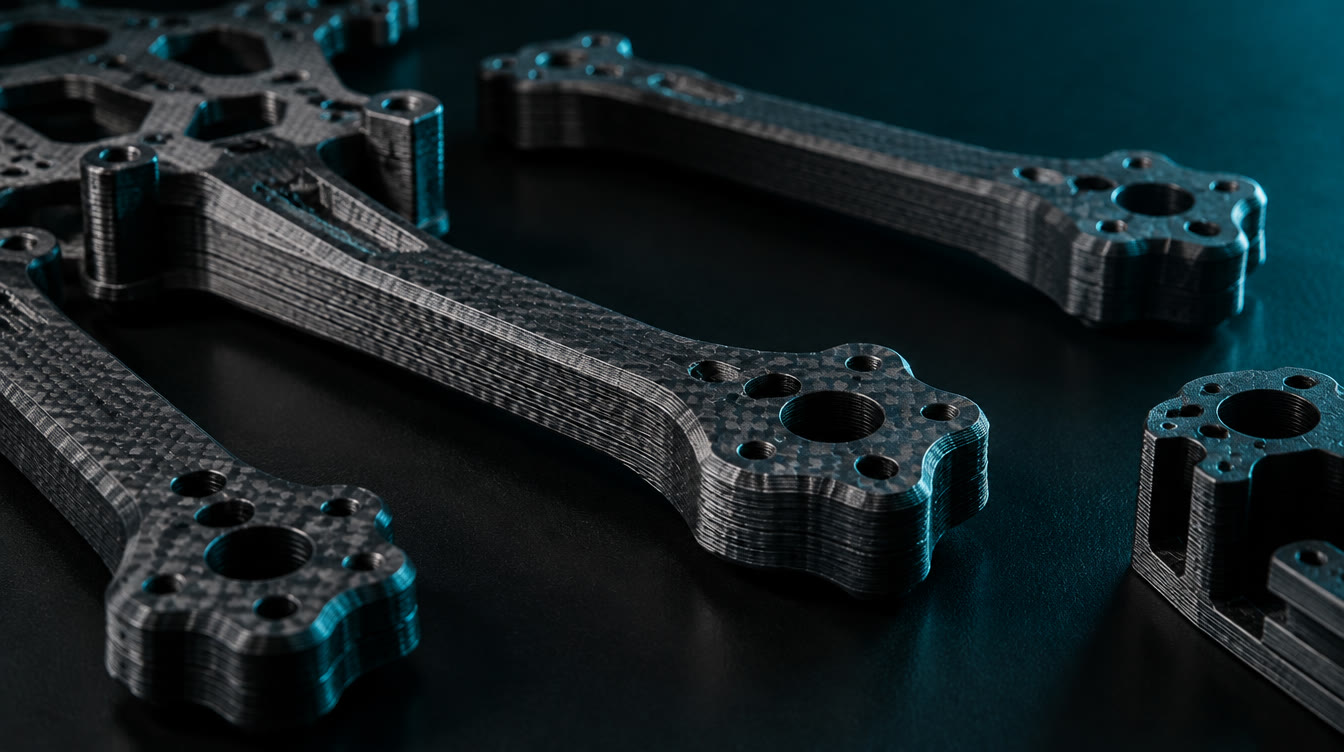
Centre-plate prototypes in cured composite sheet, housing and connector-clearance fit models, vibration isolator samples for ground testing.

Material strategy

Carbon-fibre composites where stiffness per gram matters, aluminium for payload interfaces, UV-stable grades for airframe hardware that lives in sun and salt, TPU for isolation and protection, fine resin for fit models.

Scope and validation

No propellers, no flight-critical components and no pressurised spraying. Development on the ground is not flight approval, and we do not work on crewed aviation.

Questions

Before You Request a Quote

What file do you need?

STEP, IGES, X_T or STL, or a DXF for flat parts. No file? A dimensioned photo of the broken part is enough to start.

Do you give instant quotes?

You get a process and material recommendation instantly in the quote builder. The priced quote comes from an engineer within one working day.

How long does it take?

The lead time is confirmed in each quote. Most jobs take about 2 to 6 weeks.

How do I pay?

By crypto (BTC, ETH, SOL, USDC, USDT), bank transfer, or card via PayPal. The payment details come with your quote.

What tolerances can you hold?

Printed features land around ±0.2 mm; anything that mates, seals or locates gets a machined face to the drawing.

Do you ship outside Honduras?

Yes. Parts ship across Mexico, Central America and the Caribbean from Roatán, Honduras.

Can you mark our part numbers or logo?

Yes. Printed and machined parts can be laser-marked with a part number, serial, date code or logo, including on metal and anodised aluminium. Send the artwork as SVG or DXF.

Is there anything you will not laser-cut?

Anything containing PVC or vinyl, which releases chlorine gas when cut, and composite laminates such as carbon-fibre sheet. Those we mill instead.

Can you tell me it won't work?

That is the point of the fit check. We would rather say no here than after you have paid.